News briefing
I4C warns of deepfake PM and CM 'welfare scheme' ads; Telangana flags fake ₹8,000 Diwali offer
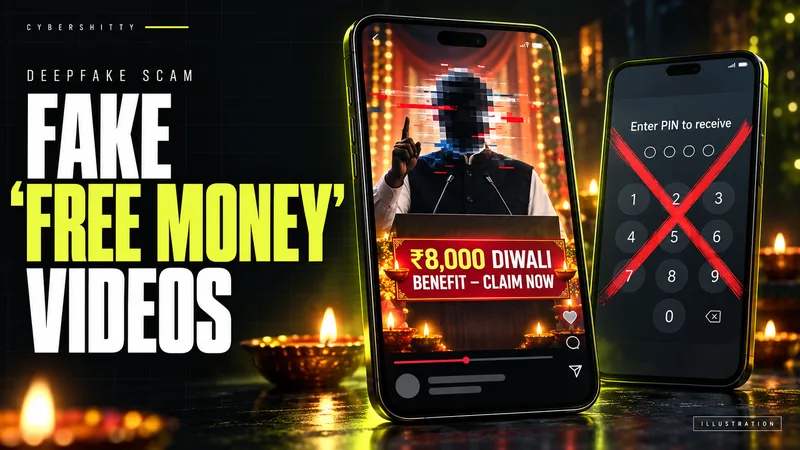
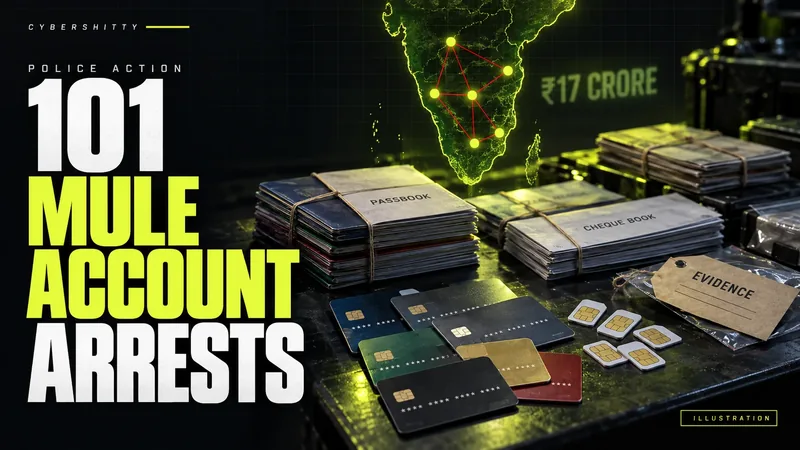
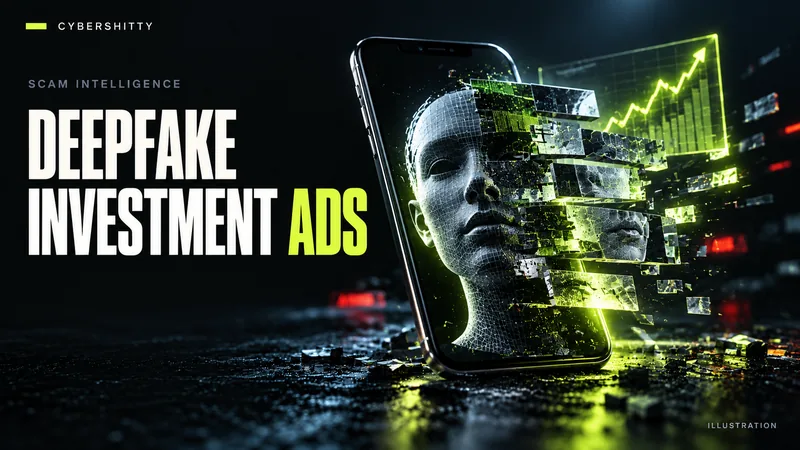
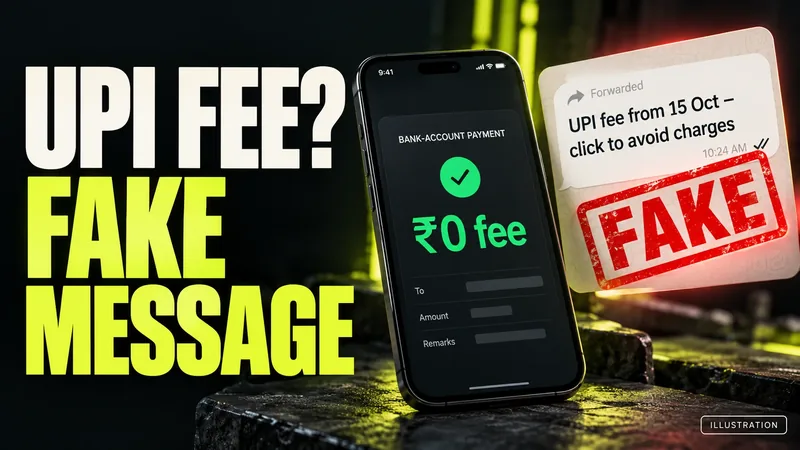
AI-generated editorial illustration by CyberShitty. Not a photograph or a document from the organisations named.
I4C says Facebook and Instagram ads with manipulated videos of the Prime Minister, Finance Minister and Chief Ministers are pushing fake welfare schemes and cashback offers. Telangana's cyber bureau has flagged a fake WhatsApp 'Diwali benefit' too.
01 / What happened
The Indian Cyber Crime Coordination Centre's (I4C) threat analytics unit issued advisory TAU/ADV/019, dated 19 October 2026, on a rise in fraud through Facebook and Instagram ads that impersonate the Prime Minister, the Finance Minister, Chief Ministers and other public figures to promote fake government welfare schemes.
- The hook: manipulated or deepfake videos show a leader announcing financial help, or ads offer cashback through scratch-card or 'spin and win' pages.
- The contact: victims are sent to a phone number, WhatsApp chat or fake website. I4C says many get calls from international numbers, mostly Pakistan (+92), saying they were 'randomly selected' for funds.
- The money: victims are made to pay again and again for 'taxes', 'processing fees', 'registration charges' or 'verification fees'. In the cashback version, they are led to approve a UPI collect request or enter their PIN, and money leaves their account.
On 30 October, Telangana Today and NewsMeter reported that the Telangana Cyber Security Bureau (TGCSB) has warned about a viral WhatsApp message claiming the Centre is giving ₹8,000 as a Diwali benefit in Prime Minister Narendra Modi's name, with a link to 'claim' it.
02 / Why it matters
Festivals make 'free money' messages easier to believe, but government aid is not released after you pay a 'processing fee' to a stranger on WhatsApp, and, as I4C points out, a UPI PIN authorises payments; it is not needed to receive money.
If a 'benefit' needs you to pay first or enter your PIN, it is not a benefit.
According to the reports, TGCSB says the ₹8,000 link can lead to fake sites that collect Aadhaar and bank details, and may trigger unauthorised UPI payments or put malicious software on your phone.
03 / Confirmed vs. claimed
Confirmed (I4C's advisory, also listed on its advisories page): the impersonation ads, the methods above, the +92 calls and I4C's advice. Reported: the TGCSB alert on the ₹8,000 message, attributed to its Director, Shikha Goel; we could not find the bureau's own post, and found no PIB Fact Check on the message yet. Claimed (by the scammers): that any leader or the Centre is handing out cash through these ads or links; I4C and TGCSB call them fake. We are not reproducing the advisory's sample ads, which show scam contact details.
04 / What to do
- Check any scheme on the department's official website or at a government office, never through an ad, a WhatsApp number or a link.
- Do not pay a 'fee' or 'tax' to receive aid. Check every UPI request before approving it, and never enter your UPI PIN to 'get' money. Our collect-request fraud explainer shows how the trick works.
- Doubt any video of a leader promising money; see how to spot a deepfake ad. Be extremely wary of +92 calls or messages claiming to be from a leader's office.
- Clicked the ₹8,000 link? Don't enter anything more, secure your bank accounts and check your transactions. If you installed an app from it, follow our installed app guide.
- Lost money? Call 1930 or use cybercrime.gov.in.
Source log / 2026-1030-DF
- I4C (MHA), NCTAU — Advisory TAU/ADV/019: Rise in Chief Minister / public figure impersonation scams (19 Oct 2026) Primary
- I4C (MHA) — Advisories (lists the 19 Oct 2026 advisory) Primary
- Deccan Chronicle — Deepfake ads of PM, CMs used to dupe public (20 Oct 2026) Secondary
- SarkariTel — I4C issues cyber fraud alert: Chief Minister impersonation scams (20 Oct 2026) Secondary
- NewsMeter — Fake ₹8,000 Diwali cash benefit message goes viral on WhatsApp; TGCSB issues alert (30 Oct 2026) Secondary
- Telangana Today — Fake Diwali WhatsApp message offers Rs 8,000; TGCSB issues warning (30 Oct 2026) Secondary